Welcome

It is a pleasure to welcome you to my blog "Creative Entertainment Productions". My hope is to have an interesting conversation about creativity and the power of brainstorming to help inspire innovation. We will explore new and interesting entertainment elements including the use of new media platforms to inform and identify trends. Finally, we will take a closer look at stage and television productions and discuss new presenting ideas as well as technologies. These topics are a passion of mine and I hope you find the conversation interesting.

About Me

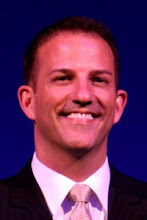
My photo
My entire life has been filled with a passion for the performing arts. I graduated in Communications and General Business at Western Michigan University. After college, I travelled to Chicago and performed in several summerstock theatre productions across the United States. I performed in the National Tour of The Pajama Game, and sang for Gaylord Entertainment's Fiesta Texas in San Antonio. After moving to New York City I became a Manager for several Shubert Broadway Theatres. Finally, I moved to Orlando, Florida to work as a Production Assistant for Walt Disney Entertainment. My current role is Producer for The Disney Event Group. We produce corporate entertainment events. I am on the Board of Directors for the Garden Theatre in Winter Garden, Florida. I am a voting member of the National Academy of Recording Arts and Sciences. My future plans include graduating with my Masters degree in Entertainment Business at Full Sail University and developing creative entertainment content for television and emerging media platforms.

Sunday, June 5, 2011

Making Your Video Go Viral


 Recently, I have been researching different ways to launch my creative content business Raybabe Productions Inc.  Digital Marketing is a crucial part to the success of my company because there are many low cost or no cost strategies to drive business.  Perhaps developing a creative video that shows a piece of my creative content could be posted on the web? What next?  How can I make this video go viral? 

David Meerman Scott from WebInkNow.com has an incredible blog on Digital Marketing and Leadership Strategies.  I found some great tips on how to make a video go viral on the world-wide-web.  Here are the eight tips Mr. Scott shared.

The most important thing is to make sure the video is funny, amazing, remarkable, or have some fascinating information or be controversial.  The video needs to have a reason for people to pass it on.

TIP #1
The first tip is that you don’t need to hire a professional.  A homemade quality video can work great.  Plan ahead and shoot several takes to get it right.

 TIP #2
Your video should be less than two minutes.  Think very short.  Although YouTube will accept a video that is less than 10 minutes, try to make the video between 30 seconds and two minutes. 

TIP #3
To best promote your video, you'll want the video title or description on YouTube to be accurate and interesting. Use descriptive keywords and language that people will find when they search for videos.  Make sure to use the correct categorizations on YouTube so people can find it.

TIP #4
Some companies try to sneak corporate-sponsored videos onto YouTube in a way that makes it seem like it is a consumer-generated video.  Scott warns us to not attempt “stealth” fake customer insertions on YouTube, as YouTube is adept at fleshing out the fakes. 

TIP #5
The fifth tip is to try a series of similar videos to build interest.  This tip may help me as I introduce the characters of a slapstick comedy film.  Perhaps a few short funny videos to help introduce my characters?  Collectively, they could tell an interesting, amusing, and short story.  These videos could create interest and link them to my films’ website.

TIP #6
When uploading your first few videos, you are likely to hear a deafening silence. You'll be waiting for comments, but none will come. You'll check your video statistics and be disappointed by the tiny number of viewers. Don’t get discouraged. It takes time to build an audience. Make sure people know it is there and can find it. Create links to your video from your home page, product pages, or online media room. Mention your video in your e-mail or offline newsletters, and create links to your video as part of your e-mail signature and those of the others in your organization.

TIP #7
You also need to make sure bloggers know about you.  Sending a link of the video to bloggers or commenting on other people's blogs (and including a link to your video) is a good way to build an audience. If you comment on blogs in the same space as yours, you might be surprised at how quickly you will get viewers to go to your video.

TIP #8
Finally, while Scott believes it is difficult to purposely create viral marketing buzz, it is certainly possible. He suggests creating a number of campaigns and observe what is a hit, then nurture the winner along. Think like a venture capitalist or movie studio and try a number of things in order to get that elusive hit.

These tips were very useful for marketing my video content and they could also help you.  Check out the link at the end of my post to view some of the nominated viral videos from the 2011 Webby Awards.  My personal favorite is the Digital Nativity.  Let me know if you had some success with your video going viral by sending me a comment.  I’d love to hear your thoughts about digital marketing and viral videos.


Sunday, May 22, 2011

Presenting Your Art To An Audience Is'nt Always Easy


I had an interesting week attending shows at the Orlando International Fringe Festival.  This year marks the Festival’s 20th anniversary combining cutting-edge performers with innovative works.  Each year, artists join together from around the world to tell their stories and produce their own shows.  All proceeds directly benefit the artists.  The festival is billed as “10 days of Theatre, Art, Music, and Madness.”  As I enjoyed the festival this year I was reminded how difficult it is to put yourself out there and have the world critique your work.  It’s not easy!  

Right around 8 years ago I had the opportunity to write and produce my own show at the Fringe Festival.  It was an amazing experience and I learned a lot about myself.  Although the critics panned my show, the experience was worth it.  I learned that you have to continually take risks creatively if you want to be successful in the entertainment industry.  Each experience teaches you something new that will help with your career goals.  This process requires a passion for art and ultimately, leadership. Without leadership your art will not find an audience.

If you really want to put your creative content out there whether on stage, television, on film, or in a book, you must have passion for it.  Many people in the industry have the passion but lack the leadership.  Leadership is essential for selling your creative content.  You must be able to build partnerships and move the process forward.  Once you have put it together, you have to sell it.  This can be the hardest part and many search for agents, managers, or producers who can do this work for them.  If your lucky, you can focus on writing and you will have a team to focus on the selling.

However, most of us have to take the lead on selling our idea by ourselves.  There are many new avenues for us to sell our creative content.  Print-on-demand services allow writers to self publish.  These services are becoming more popular as new technologies begin to emerge.  The traditional model is slowly fading away.  You have to do your homework when selecting one of these services.  You should learn about the many different companies available and evaluate the pros and cons of each.  You may find the perfect fit for your creative content.  You can find more information on POD’s at www.sfwa.org. 

Fringe is an excellent opportunity for creative writers and artists to put their show out there in a relatively safe environment.  Print-on-demand services offer a similar but different opportunity.  However, you must have a balance of leadership and passion.


It May Be Time To Self-Publish


 Are you frustrated with trying to find an agent to get your creative work published and distributed?  It can be a daunting task due to the overwhelming number of writers simultaneously shopping their work.  Agents and industry executives are bombarded with submissions from creative types and they cannot possibly sign us all. 

Recently, I have been researching alternative ways to publish and distribute my own creative work.  My findings reveal that there are other alternatives to the traditional model we have become aware of through the years.  Technology and the Internet have changed the way consumers are purchasing content.  Print-On-Demand (POD) services open up opportunities for self-publishing for many writers.

Print on demand and publish on demand is a printing technology and business process in which new copies of a book (or other document) are not printed until an order has been received.   Many traditional small presses have replaced their traditional printing equipment with POD equipment or contract their printing out to POD service providers.  

POD services utilize digital printing technology to provide publishing services to writers. They range from DIY services like Lulu.com, which provides free online templates that allow anyone to upload and format a book, to super-fancy (and extremely expensive) publishing packages that include editing, custom cover design, enhanced marketing, and other extras (www.sfwa.org).

These POD services are not just for books.  You can find service providers who specialize in publishing and distributing your music like CDBaby.com.  This service will sell your music to iTunes and other music providers.  They will make your music available for purchase online.  In addition, you can find services to offer your film or audio-visual work.  CreateSpace is a subsidiary of Amazon and offers POD services for books, CD’s, and DVD’s. 

There are pros and cons that need to be carefully considered when choosing a POD service.  You should understand the cost for the service and how much revenue you will retain per unit.  You want to maintain control of your work and make sure you maintain publishing rights.

POD services can be an excellent option for some writers and some projects. For others, however, it is simply not the right choice. It is vitally important
to understand the facts, assess your goals, and make an informed decision.

You can find some incredible information on POD’s from the Science Fiction and Fantasy Writers of America website.  Check it out!

Sunday, April 24, 2011

Protecting your Creative Property


It is very important for creative professionals to protect their intellectual properties.  Can you image if someone infringed on your creative project?  I know, I would be devastated if that happened to me.  So I thought this week, I would interview an entertainment attorney who can help answer some important questions so we can protect our creative works.  I was fortunate to land an interview with Steve Hilsee, Senior Legal Entertainment Council for Walt Disney Entertainment.  Steve and I have actually worked on a few projects together throughout my years at Walt Disney World.  He advised me through a major contract involving an event featuring Lenny Kravitz in concert.  He was invaluable during tough negotiations with multiple parties.  It was a source of comfort for me to have Steve’s experience with entertainment contracts.  I sat down with Hilsee and we discussed his latest projects with Walt Disney Entertainment.

RF:  First, I want to thank you for taking time out of your busy schedule to talk to me about entertainment law and your role with Walt Disney Entertainment.  Can you tell me some of the projects that you are currently working on for the company?

SH:  First, it is my pleasure to sit down and talk with you, Ray.  You and I have crossed many paths throughout the years.  My role with Walt Disney Entertainment is to work with all the production and casting teams at the Walt Disney World Resort and Disney Cruise Line and protect the company from any legal liabilities that may arise.  Needless to say, I stay quite busy with a multitude of entertainment law issues.  Currently, I am working on an international contract with Talent Casting and Booking.  They have identified a performing group from China that they want to contract to perform daily at the China Pavilion at Epcot.  They identified the group through a third party from New York City.  We drafted a detailed contract to be sure that all labor laws are followed.  With an international contract we need to understand and work with different customs, terms, and legalities.  There have been several delays in the process and the third party refused to forward our contract to the Chinese government for approval of the performer’s work visas.  It has been a process.

RF:  International contracts especially in China must be difficult to follow as the law continues to evolve?  Did you work on any of the Disney Shanghai Theme Park negotiations with the Peoples Republic of China?

SH:  Yes, international law can be tricky, especially in regards to China.  I did not work on the legal negotiations for the Disney Park in Shanghai.  However, I was made aware of the progress and the issues we were negotiating with the Chinese government.  Our legal team did a great job with these negotiations and ultimately arrived at an agreement.  This arrangement is going to open up a whole new market for Disney.  It’s a huge accomplishment!

RF:  What entertainment law concerns do you deal with on a regular basis?

SH:  Well, I examine multiple contracts everyday that involve agreements with performers, production companies, as well as intellectual property issues.  For example, we produced Finding Nemo, The Musical and I was the lead attorney with many of those contracts.  Disney hired many outside consultants to develop the show.  One of those contracts involved the creators of the music.  Tony-award winning musical composer, Robert Lopez, and his wife, Kristen Anderson-Lopez, penned new songs specifically for the show.   Of course, the rest of the music was taken from the movie.  So, all of these intellectual property issues were negotiated with each rightful owner of the music.

RF:  Do you have any advice for creative individuals who are creating music or other intellectual property?

SH:  The most advice I can give is to be sure you are consulting a qualified attorney who specializes in entertainment law.  There are many attorneys out there but you must work with someone who specifically understands the entertainment industry.  It will be most beneficial for you to seek council prior to entering into an arrangement.  This is the best advice I can give you.

RF:  Thanks again Steve for your time.  I know you are a very busy man and I appreciate you sharing your insight. 

SH:  You’re welcome Ray.

My conversation with Steve reinforced my belief that those who are involved in the entertainment industry should seek the counsel of a qualified entertainment law attorney. Taking this invaluable step can protect you from making a legal mistake that could endanger your company or your intellectual property rights. 

http://disney.go.com/index


Sunday, April 3, 2011

Registering Your Creative Work is a Must!


Many creative people fail to register their scripts or music with the United States Copyrights Office.  This causes many legal problems for the creative community.  Recently, I have been researching articles for Intellectual Property infringements and came across three that were interesting.  I thought I would share my thoughts on these cases.

First, in a copyright infringement action against the producers of You Don’t Mess With the Zohan, a court awarded the defendants, Sony Pictures Entertainment Inc., $1,000 in attorney fees after considering Robert Cabell, the plaintiffs financial circumstances (Loeb & Loeb, 2011).  The district court granted Sony’s motion for summary judgment.  Which is a decision made based on evidence and statements presented on record without a trial (www.lectlaw.com).  Cabell alleged that the film and its marketing materials infringed his copyrights in works featuring a character named Jayms Blonde.  Apparently, he did not have the supporting evidence to convince the court to take the case to trial.  The court ruled that Cabell’s claims were objectively unreasonable.  The original motion was a fee upwards of $568,000.  However, the court considered Cabells financial situation and lowered the fee.  This is an example of someone who took the risk of suing a major corporation without the proper evidence.  He was lucky his financial situation was bleak because the court could have required him to pay all of the defendant’s attorney fees. 

The second article that I have found interesting involves new technologies that are emerging and causing a whole lot of Intellectual Property issues.  Recently, a cease-and-desist letter was sent to Ali Davar, founder and CEO of Zite, the iPad news magazine software creator (Indvik, 2011).  The letter was sent from some heavy hitters in the news industry including the Associated Press, Dow Jones, and Gannett and Getty Images.  Zite analyzes users everyday reading habits and pulls the information from Facebook, Twitter, and Google Reader.  They know what stories the reader clicked on or bypassed.  They even can determine how long they’re read.  This gives users an online magazine tailored to their own interests.

The concern comes from the publishers who complain that pulling the content from their sites takes away the potential for ads and other data.  They are not getting any pageviews or ad impressions and this has an adverse effect on their businesses.  Davar has cooperated with the publishers and agreed to render their content as a webpage.  It will be interesting to see if Zite begins a strategy with these publishers in the future.  It seems to me that they could negotiate a deal where both Zite and the Publishers could benefit.

Finally, the last article deals with writers stealing content from online blogs to incorporate in television episodes.  Apparently, CBS and their CSI:NY series created a show based on Teddy Wayne’s creative blog (www.motherboard.tv).  Unfortunately, Wayne did not understand his freelance contract with Radar, the gossip magazine, and unknowingly handed over his rights to them.  Therefore, he is unable to seek action because he is not the owner of the copyright.  A CBS attorney implicitly acknowledged that the series used his blog to develop the show.  This brings us to the importance of understanding anything that you post on the Internet.  If you post your content on Facebook, you have just given them the right to do practically whatever they feel like doing with your photos, updates, and profile data (Pasternack, 2011).   As creative people, we need to always make sure your creative content is protected.  You can find more information on how to register your work with the United States Copyright Office at www.copyright.gov. 

References:


Sunday, March 27, 2011

Columbia Artists Management Inc.


Are you in need of an Artist Management Company to help you manage your career?  Recently, I have been researching companies who do just that and found one that has been in existence since 1930.  Columbia Artists Management Inc. (CAMI) is an international leader in managing the careers and touring activities of the world's most prominent performing artists and institutions.  Led by Chairman and CEO Ronald Wilford as well as the managing partners of their subsidiaries, the company has been on the forefront of performing arts management and production throughout the world for eight decades.  You should definitely do your own research when looking for someone to manage your career, however, here is a company with years of experience that may be an opportunity for you.  

CAMI continues its legacy in the discovery and career development of the next generation of young artists.  The company maintains its position as the world's largest classical music management firm internationally and is recognized for its distinguished list of Artists & Attractions. 

The firm’s managers include a diverse selection of individuals who specialize in the careers of instrumentalists, conductors, opera singers and other vocalists, as well as in the touring activities of orchestras and instrumental ensembles. Complementing its activities in classical music, the company manages an extensive roster of world music performing artists, as well as the leading classical, modern and popular dance companies.

For over thirty years, through its Columbia Artist Theatricals (CAT) subsidiary, CAMI has pioneered the development of national Broadway touring. Today, CAT continues its long tradition of distributing the highest caliber of theatrical entertainment. Through the further development of collaborative partnerships, CAMI continues to expand its activities at the forefront of media development and the performing arts.

As you are searching for someone to represent you, you should make sure the company has the experience and clout to lead your career in a positive direction.  This may be the most important decision you make in your career.  For more information, check out CAMI website.  You may find some helpful information from one of the leading Artist Management companies in the industry.

Reference

Retrieved from:  http://www.cami.com/?


Sunday, March 20, 2011

Sponsorships can be a win/win for Artists and Companies


Are you having a hard time finding the funds for your project?  Recently, I came across an interesting article on the Artist Management Resource website.  The article gives some great advice for Artists who may be looking for sponsors for their tour.  It turns out that companies are also looking for new ways to reach their customers.  Many businesses are beginning to discover that consumers are becoming harder to reach using traditional advertising/marketing techniques.  Sponsorships can provide a win-win situation for all involved - a way for businesses to reach consumers more effectively by utilizing integrated marketing; and an avenue for musicians to acquire funding for their tours and/or projects. I thought I would share some important tips from the article so you can jumpstart your career.

First, you must be able to clearly identify your audience, their loyalty level and buying habits - apart from buying your music/merchandise and attending your shows.  Your target audience may just be the right fit.  For example, if the highest percentage of your audience member’s are 34-55 year old females; they are proven to buy health and beauty products.  Perhaps businesses that sell similar products to this audience would be interested in supporting your efforts. 

You must also identify the benefits and market them to potential sponsors.  Be aware of the benefits that will be most useful to a prospective sponsor including your mailing list, image, talent, or perhaps even logos, merchandise, and even copyrights and trademarks.  You should keep your fees reasonable as well.  In addition, you need to be clear about the type of image you project.  Sponsors will associate with projects that fit their image they are trying to establish and cater to the demographics they are trying to reach.

Another suggestion is to create or produce a project that is appealing to the media.  Companies prefer projects that can attract TV coverage, especially if their logos and/or products can show up in the broadcast of an event.  Be open to bundling your project with other companies that have more clout than you.  However, you must limit the number of companies that you attach to the event/project.  Conflicts will occur when sponsors compete or don’t match well with other co-sponsors.

Finally, you want to help your sponsor to gauge the effectiveness of the benefits that you are offering them.  The business needs to make sure they are generating a solid return on their investment.  A suggestion may be to hand out flyers at the event with a coupon offering a discount or promotion.  This will help the company measure the success of the sponsorship.  You also need to prove that you can deliver the benefits promised to the sponsor.  Make sure you follow through on all professional promises.

Artists continually search for funds to help support their projects.  Sponsors are a great way to help!  You can find more great information on this topic as well as Artist Management information at www.artistmanagementresource.com.  

Retrieved from:  Rwakaara, J (2007) ArtistManagementResource.com